
Understanding Chronic Pain
Patient education and resources to help you understand your pain and take an active role in your recovery. Chronic pain is real, and it does not necessarily mean that there is ongoing damage in your body — there are many things you can do, together with your healthcare team, to reduce pain and improve your quality of life.
Hover over a topic’s name or picture for a moment to read more about it, or click through for the videos and resources.
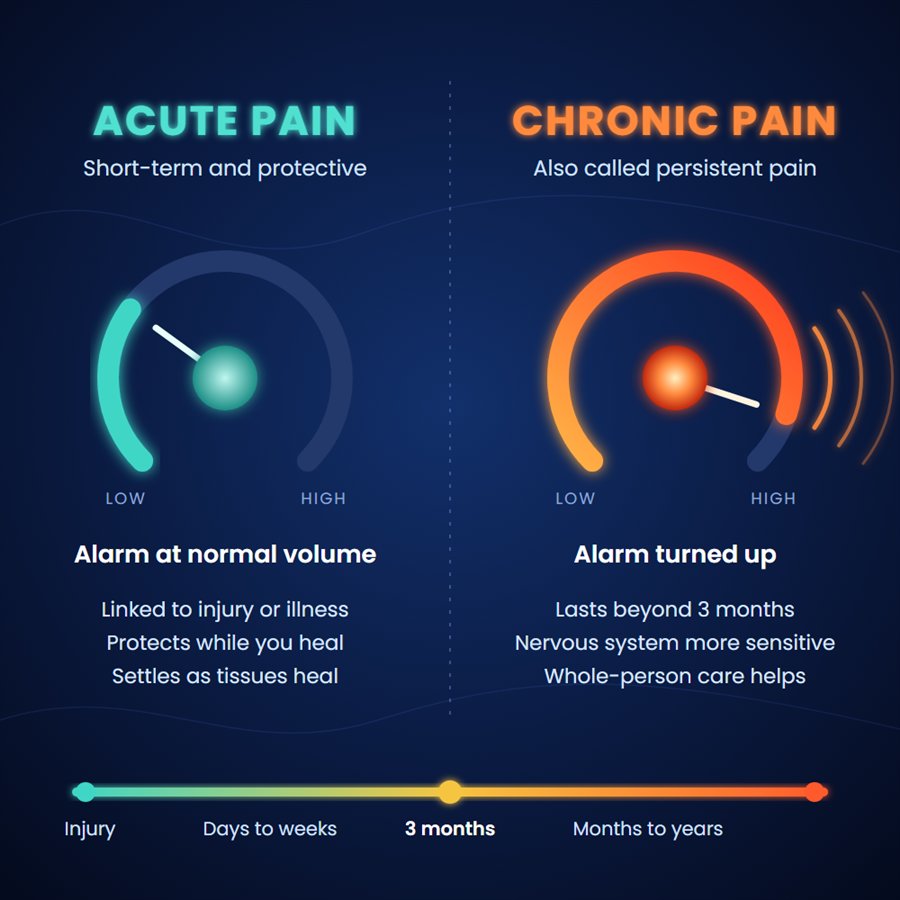
Understanding Pain


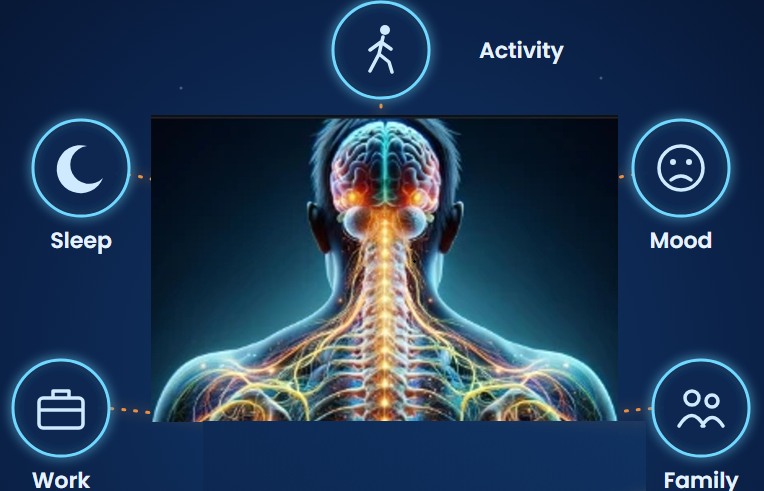
How Pain Affects Life


What Helps



Your Body Dermatomes
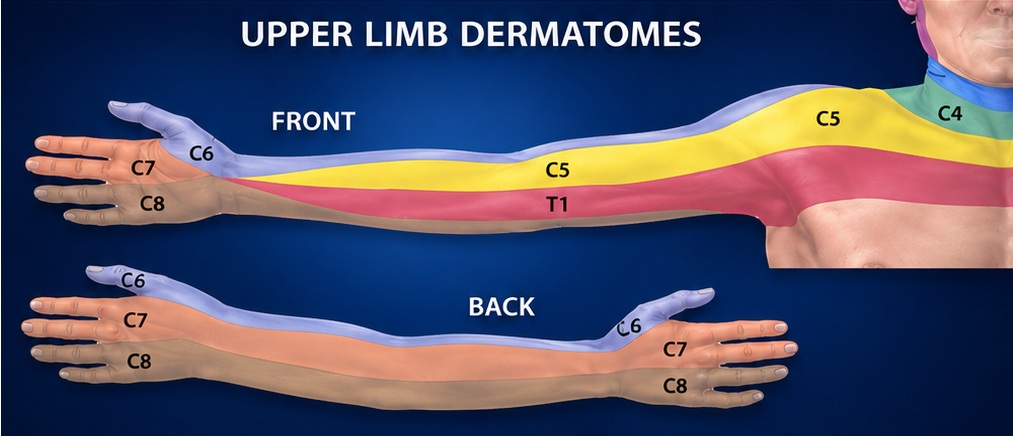
Dermatomes are areas of skin supplied predominantly by sensory nerve fibres from a particular spinal nerve root. When a spinal nerve root becomes irritated or compressed, pain, tingling, numbness or altered sensation may travel along the corresponding dermatome. In the upper limb, symptoms commonly involve the neck, shoulder, arm, forearm or hand; in the trunk, pain may travel around the chest or abdomen; and in the lower limb, symptoms may extend through the buttock, thigh, calf or foot.
Recognising a dermatomal pattern can provide an important clue to the location of nerve-root irritation and help guide further assessment and treatment. However, dermatomes overlap between neighbouring nerve roots and symptoms do not always follow textbook patterns exactly. The underlying cause—such as a disc problem, spinal stenosis, inflammation or another nerve disorder—needs to be identified before an appropriate treatment plan is recommended.
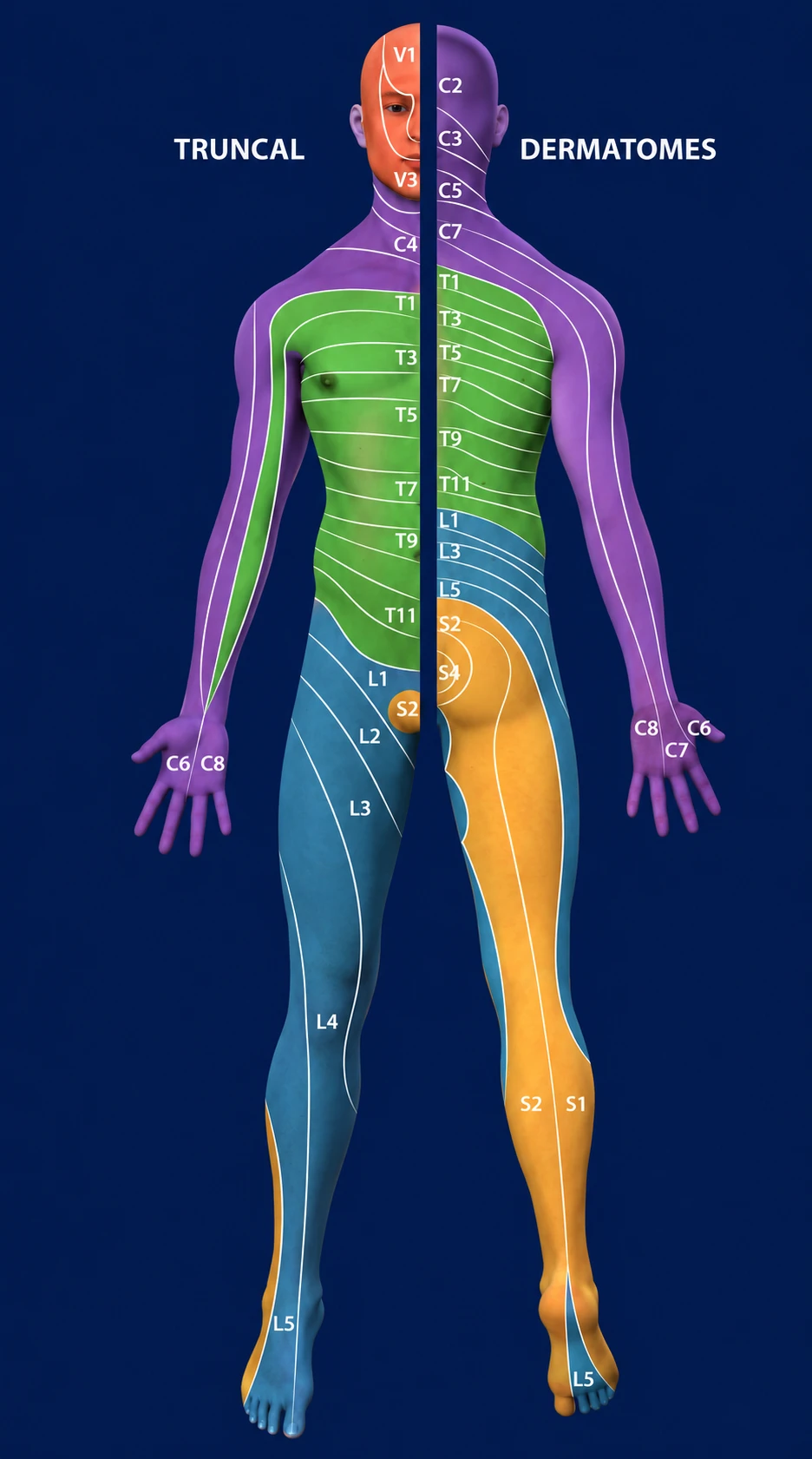
Dermatomes are areas of skin supplied predominantly by sensory nerve fibres from a particular spinal nerve root. When a spinal nerve root becomes irritated or compressed, pain, tingling, numbness or altered sensation may travel along the corresponding dermatome. In the upper limb, symptoms commonly involve the neck, shoulder, arm, forearm or hand; in the trunk, pain may travel around the chest or abdomen; and in the lower limb, symptoms may extend through the buttock, thigh, calf or foot.
Recognising a dermatomal pattern can provide an important clue to the location of nerve-root irritation and help guide further assessment and treatment. However, dermatomes overlap between neighbouring nerve roots and symptoms do not always follow textbook patterns exactly. The underlying cause—such as a disc problem, spinal stenosis, inflammation or another nerve disorder—needs to be identified before an appropriate treatment plan is recommended.
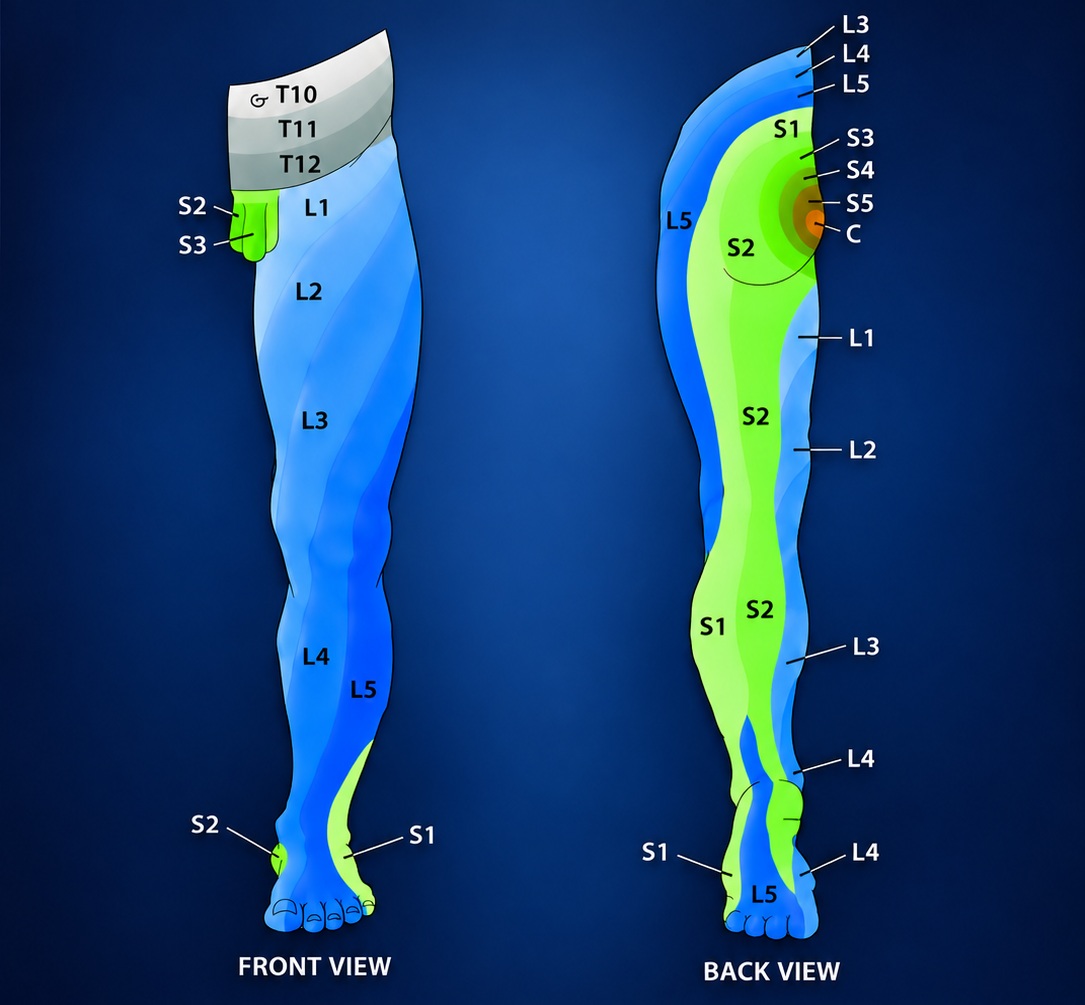
Dermatomes are areas of skin supplied predominantly by sensory nerve fibres from a particular spinal nerve root. When a spinal nerve root becomes irritated or compressed, pain, tingling, numbness or altered sensation may travel along the corresponding dermatome. In the upper limb, symptoms commonly involve the neck, shoulder, arm, forearm or hand; in the trunk, pain may travel around the chest or abdomen; and in the lower limb, symptoms may extend through the buttock, thigh, calf or foot.
Recognising a dermatomal pattern can provide an important clue to the location of nerve-root irritation and help guide further assessment and treatment. However, dermatomes overlap between neighbouring nerve roots and symptoms do not always follow textbook patterns exactly. The underlying cause—such as a disc problem, spinal stenosis, inflammation or another nerve disorder—needs to be identified before an appropriate treatment plan is recommended.
These resources are provided for general patient education and are not a substitute for an individual medical assessment or treatment plan. Persistent pain can have many causes, and the most appropriate management depends on the individual. If you have new, severe or changing symptoms, discuss them with your doctor or treating health professional. The videos and websites listed are produced by other organisations; links open on the external website.